Gentle vs. Aggressive Treatment: Finding the Right Approach
The Basic Idea
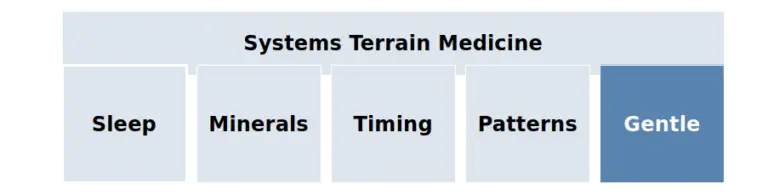
In Systems Terrain Medicine, treatment is designed to work with your system—not push it.
Some people are so sensitive, they cant tolerate many foods or supplements.
Other people seem to tolerate everything well, but have symptoms that don’t’ change no matter what they do.
In Systems Terrain Medicine the goal is matching the intensity of treatment to what your system can actually handle.
The Common Pattern
Many people come in already doing a lot:
Multiple supplements
Complex protocols
Frequent changes based on new information
Sometimes this helps temporarily.
But often it leads to:
Increased sensitivity
Unpredictable reactions
Progress that doesn’t last
When Treatment Becomes Too Aggressive
Aggressive treatment isn’t just about strong substances.
It can include:
Doing too many things at once
Making changes too quickly
Pushing the body to respond before it’s ready
Treating every symptom as something to “fix” immediately
This often creates more instability instead of less.
“Detox Reactions” and Setbacks
There’s a common belief that feeling worse means something is working.
Sometimes mild reactions can happen.
But ongoing or intense reactions often mean the system is being pushed too hard—or asked to do more than it can handle at that stage.
When the body is overwhelmed:
It compensates
It becomes more reactive
It may stop responding altogether
What Gentle Treatment Looks Like
Gentle doesn’t mean weak.
It means appropriate.
In practice, this often means:
Fewer interventions at a time
Lower doses, adjusted as needed
Giving the body time to respond
Building from a stable foundation
The focus is on consistency and tolerance, not intensity.
Why This Works Better
When treatment matches what the system can handle:
The body responds more predictably
Improvements are more stable
Less effort is needed over time
Instead of forcing change, you allow it to build.
As the system becomes more stable, more direct or intensive treatments can often be used effectively
How This Connects to Timing
Gentle vs. aggressive is closely tied to timing.
Even a good intervention can feel “too strong” if it’s applied too early.
As the system becomes more stable, it can handle more.
What This Means For You
If you’ve had experiences like:
Feeling worse after starting a protocol
Doing many things but not improving
Progress that disappears when you stop treatment
It may not be the wrong approach—
it may have been too much, too fast.
The Goal
The goal is not to push your body into change.
It’s to create the conditions where change can happen—and hold.
If your system has become sensitive or reactive over time,
a more measured, gentle approach is often what allows progress to restart.