An Individual Approach To Digestive Health

Woman overwhelmed by diets, supplements, testing and digestive protocols, with a path toward a more individualized approach.
Illustration of a woman wondering where to begin, surrounded by restrictive diet plans, supplements, test results, and a health protocol.

Already changed your diet – but still having digestive symptoms

Digestive symptoms can be surprisingly difficult to navigate. There is an enormous amount of advice online for conditions such as SIBO, Candida, and “leaky gut.”

Online advice often presents each of these as an explanation for a while range of symptoms. This is followed with advice designed to apply to as many people as possible. What we get is broad recommendations for everyone, restrictive diets, probiotics, cleanses, stool tests, and protocols.

However, in practice, everyone is different. Digestive symptoms can arise for very different reasons. Just because a specific supplement or diet works for some people, that does not mean it will work for everyone.

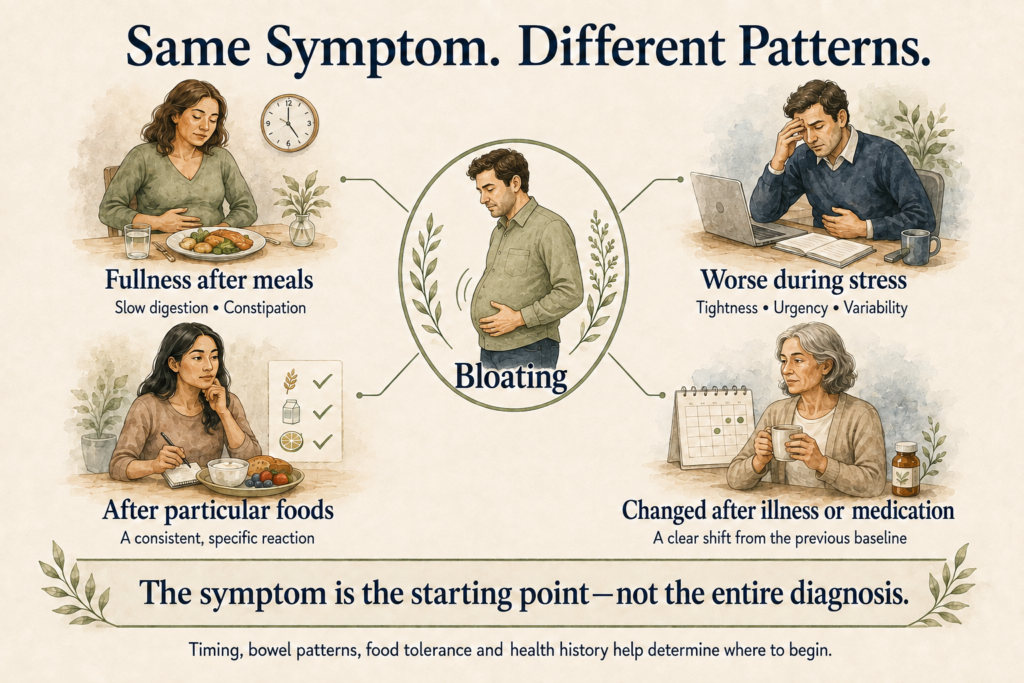
Common digestive symptoms people may seek naturopathic care for:

  • Bloating or abdominal discomfort after eating

  • Chronic constipation, diarrhea, or alternating bowel patterns

  • Reflux or upper digestive discomfort

  • Food reactions or uncertainty about what to eat

  • Digestive changes following illness, medication, or major stress

  • Difficulty tolerating foods or supplements

  • Fatigue, headaches, or other symptoms that seem connected to digestion

  • Persistent symptoms despite dietary changes, probiotics, or previous protocols

Infographic titled “A More Manageable Way Forward” presents three principles: testing with a purpose, using foods and supplements for a reason, and making changes at a manageable pace.

Already Tried Testing, Diet Changes and Supplements?

You may have completed a stool test, worked with a nutritionist, changed your diet or tried several digestive supplements—and still have symptoms. Perhaps some things helped temporarily. Perhaps you now have a long list of recommendations, but little clarity about what is worth continuing.

My starting point is to understand what you have already tried and how you responded. From there, we develop a manageable program with a clear purpose for each recommendation. 

A detailed case history

We discuss your digestive symptoms, when they occur, your bowel patterns, food reactions and any changes that preceded the problem. We also review your medications, supplements, previous testing and treatments.

What helped, what aggravated symptoms and what made no difference all matter. Some people are highly sensitive to foods and supplements; others notice little change despite trying many approaches. Your experience helps guide both the recommendations and the pace of the program.

A constitutional perspective

I draw on constitutional herbal medicine and Ayurvedic assessment to
consider your digestive symptoms alongside your appetite, energy,
sleep and broader patterns of health. This perspective helps guide my
choice of herbs and how we begin treatment.

Exploring foods and food additives

Food changes are considered in light of your history, actual reactions and
nutritional needs. I also use applied kinesiology muscle testing to
help uncover possible reactions to foods, additive and other
substances.

When food restriction is appropriate, we discuss its purpose, how
to assess whether it helps and, when appropriate, how to expand your
diet again.

A focused herbal program

Herbal medicine is a central part of my approach. Depending on your needs, I may recommend an individualized herbal formula, selected supplements or specific food changes.

I generally begin with a small number of recommendations so we can observe your response before adding more. Follow-up helps us decide what is worth continuing, adjusting or stopping.

You do not automatically receive a large “leaky gut” protocol. The aim is a program you can follow, informed by your remaining symptoms, your tolerance and what you have already learned through previous treatment.


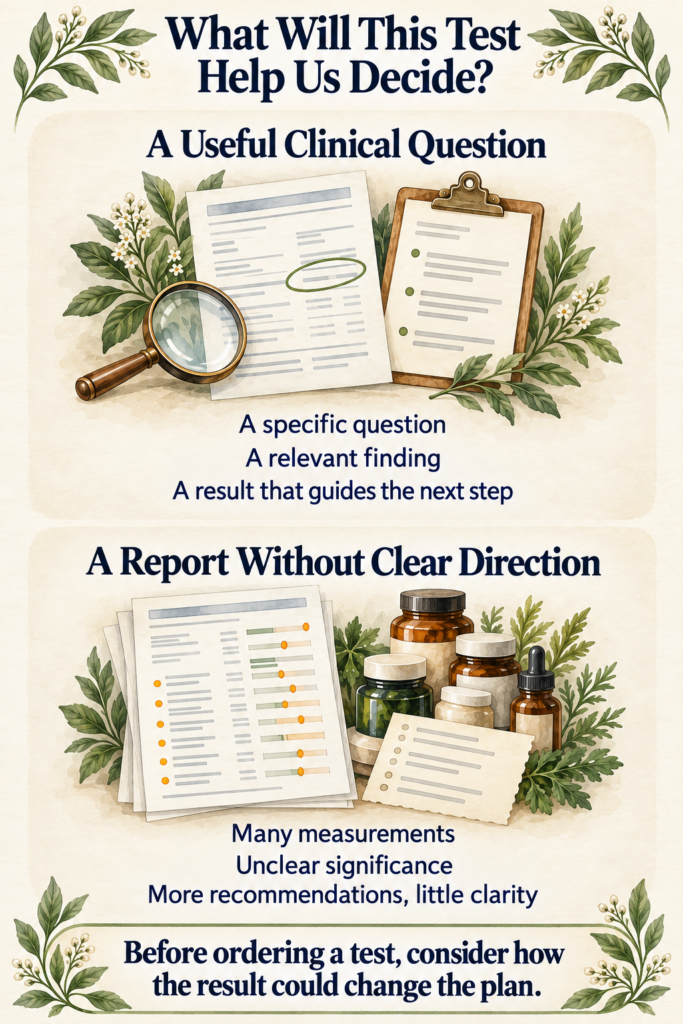
Infographic contrasts a useful test that answers a clinical question and guides the next step with a report full of measurements but little clarity. It advises considering how a result could change the plan before ordering a test.

Functional Lab Tests for Digestion: The Good and the Bad

Functional stool tests have been used by alternative health practitioners for decades.

 Years ago these tended to come as smaller panels and recommend by the practitioner. Today many test panels are larger panels and more direct-to-consumer marketing.
Stool tests may help answer specific questions about inflammation and digestive function. Their value depends on what is being measured, why the test is being ordered and how the result will influence recommendations.

It is possible for a test to provide a great deal of information without explaining what is causing those symptoms—or what should be done differently. For example, a microbiome panel may report numerous bacteria and their measured amounts, yet still not provide an individualized course of action. With dozens of markers on a report, it is possible to give a few markers that are just slightly outside of an ideal range more importance then they actually deserve. 


This is why lab tests should be done only when needed. Protocols should not be givens just to move a lab marker considering the whole person.