Already Tried Testing, Diet Changes and Supplements?
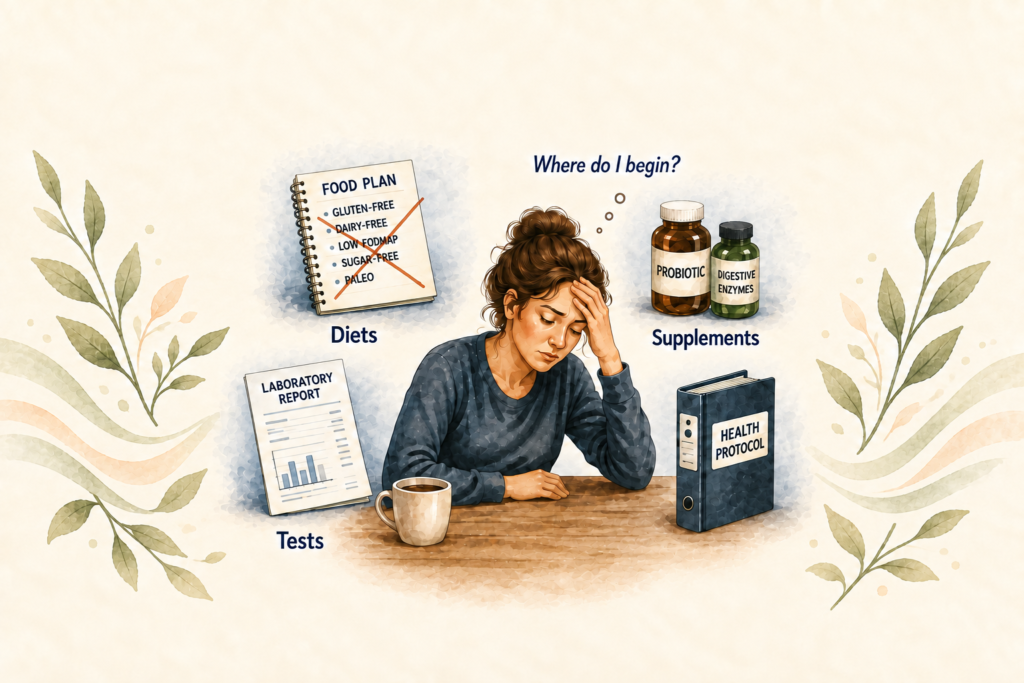
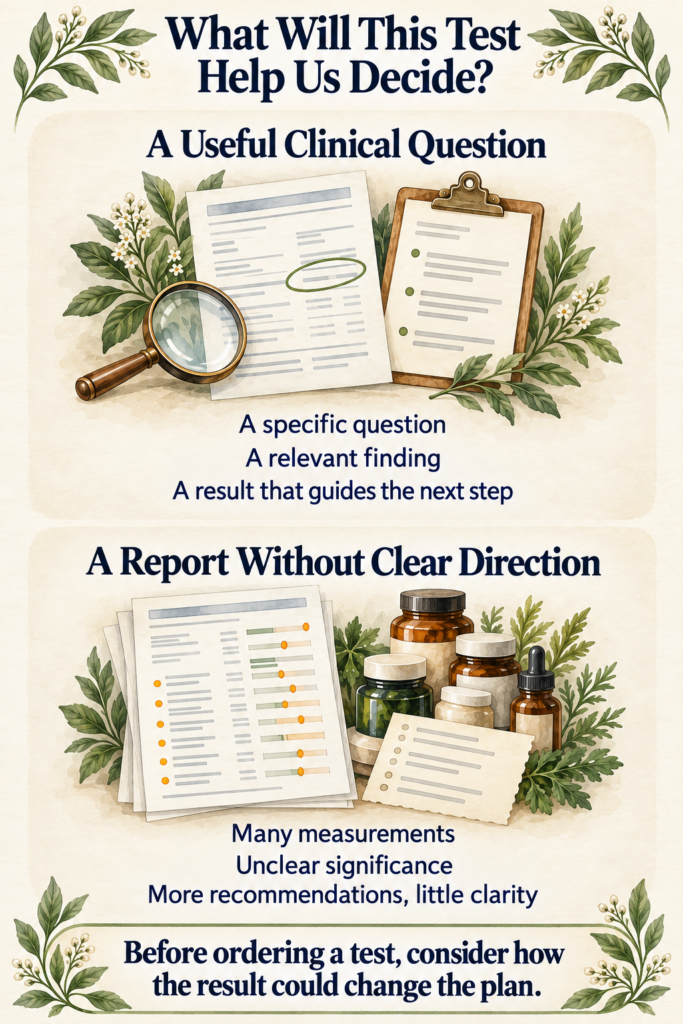
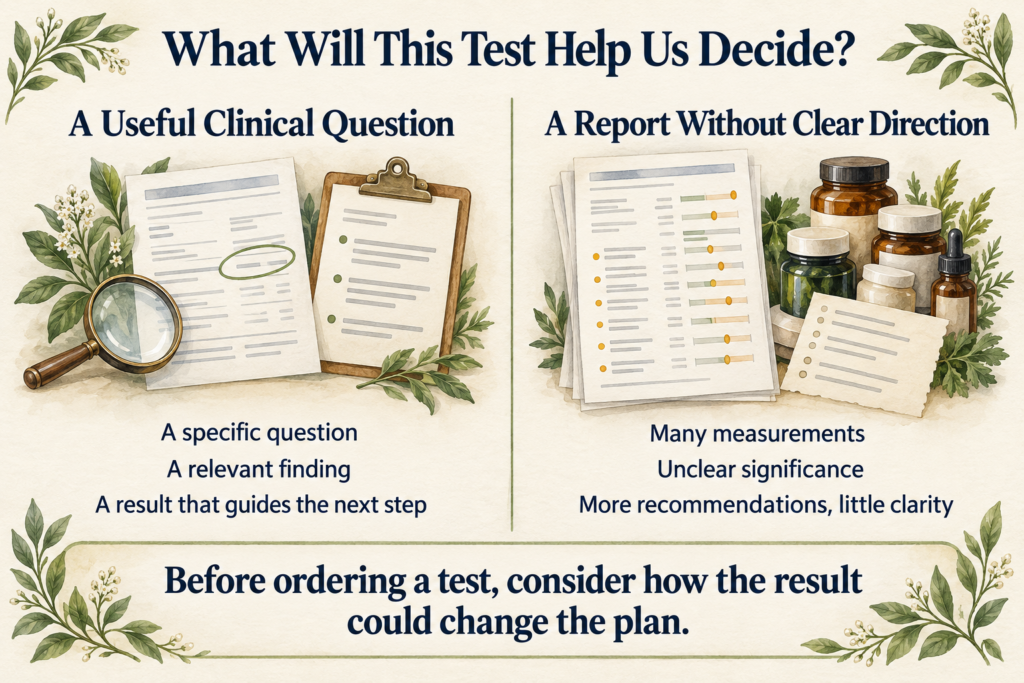
You may have completed a stool test, worked with a nutritionist, changed your diet or tried several digestive supplements—and still have symptoms. Perhaps some things helped temporarily. Perhaps you now have a long list of recommendations, but little clarity about what is worth continuing.
My starting point is to understand what you have already tried and how you responded. From there, we develop a manageable program with a clear purpose for each recommendation.
A detailed case history
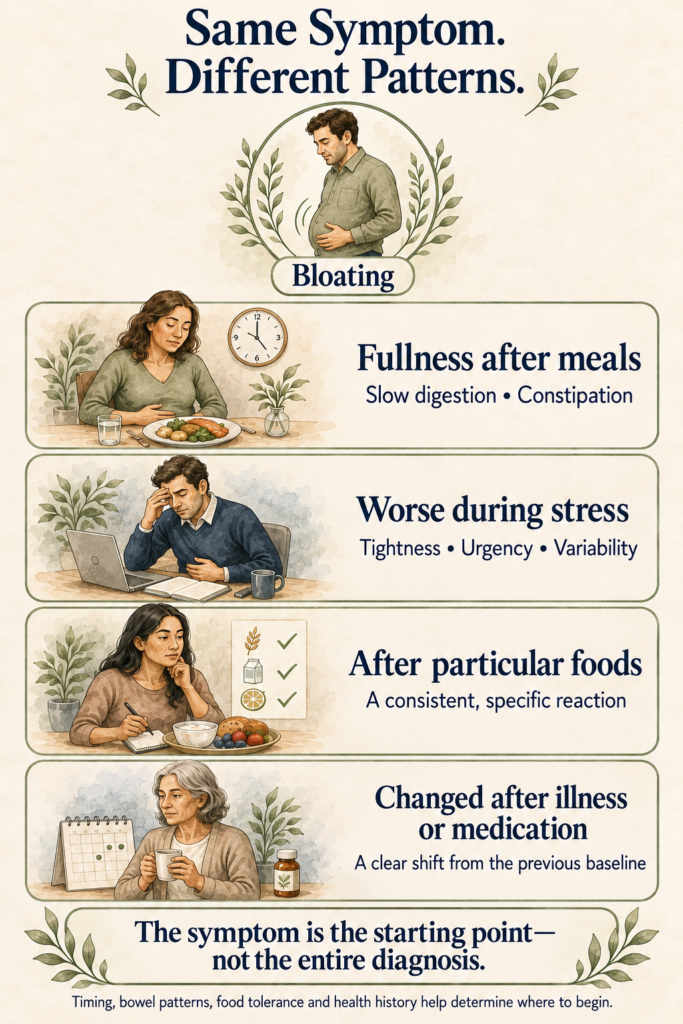
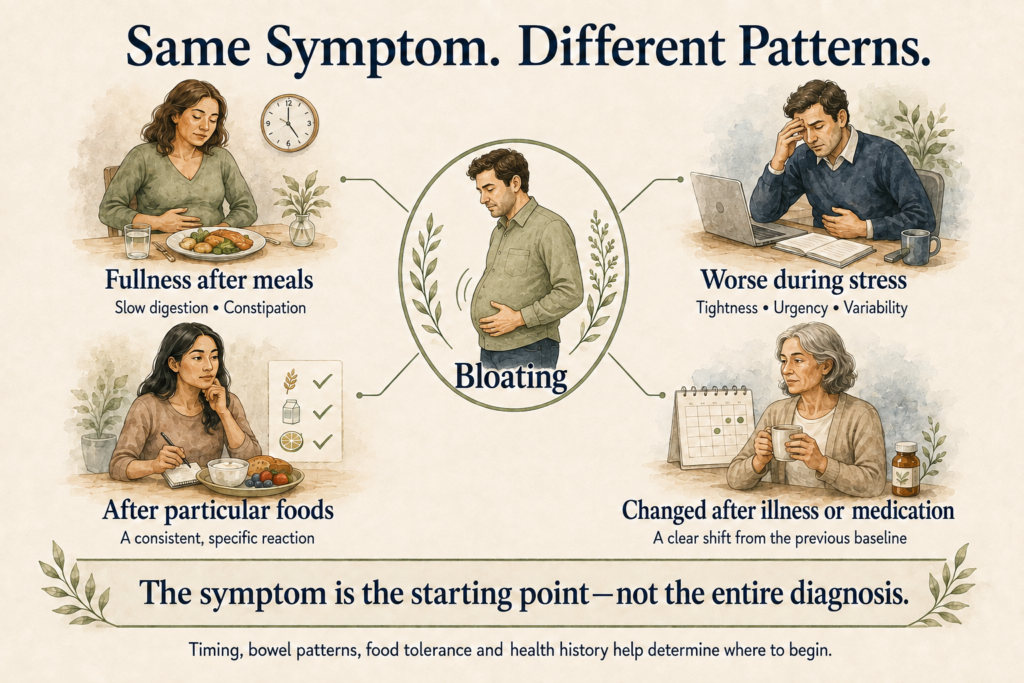
We discuss your digestive symptoms, when they occur, your bowel patterns, food reactions and any changes that preceded the problem. We also review your medications, supplements, previous testing and treatments.
What helped, what aggravated symptoms and what made no difference all matter. Some people are highly sensitive to foods and supplements; others notice little change despite trying many approaches. Your experience helps guide both the recommendations and the pace of the program.
A constitutional perspective
I draw on constitutional herbal medicine and Ayurvedic assessment to
consider your digestive symptoms alongside your appetite, energy,
sleep and broader patterns of health. This perspective helps guide my
choice of herbs and how we begin treatment.
Exploring foods and food additives
Food changes are considered in light of your history, actual reactions and
nutritional needs. I also use applied kinesiology muscle testing to
help uncover possible reactions to foods, additive and other
substances.
When food restriction is appropriate, we discuss its purpose, how
to assess whether it helps and, when appropriate, how to expand your
diet again.
A focused herbal program
Herbal medicine is a central part of my approach. Depending on your needs, I may recommend an individualized herbal formula, selected supplements or specific food changes.
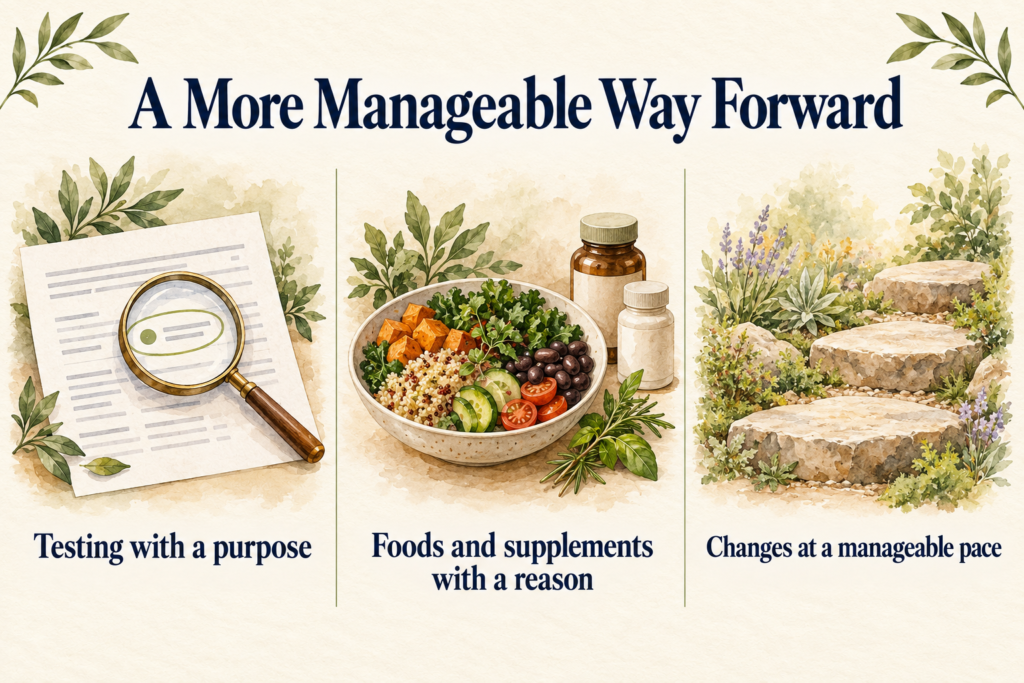
I generally begin with a small number of recommendations so we can observe your response before adding more. Follow-up helps us decide what is worth continuing, adjusting or stopping.
You do not automatically receive a large “leaky gut” protocol. The aim is a program you can follow, informed by your remaining symptoms, your tolerance and what you have already learned through previous treatment.