Pattern-Based Naturopathic Treatment for Chronic Insomnia
A holistic treatment plan for sleep begins by understanding the underlying sleep pattern to create an individualized plan. This may include lifestyle adjustments, herbs, supplements, and other supportive interventions.
Many people who see a naturopathic doctor for sleep have already tried multiple supplements, medications, sleep hygiene strategies and stress reduction protocols. So I find it important to go through a full health history to not simply repeat what people have tried before.
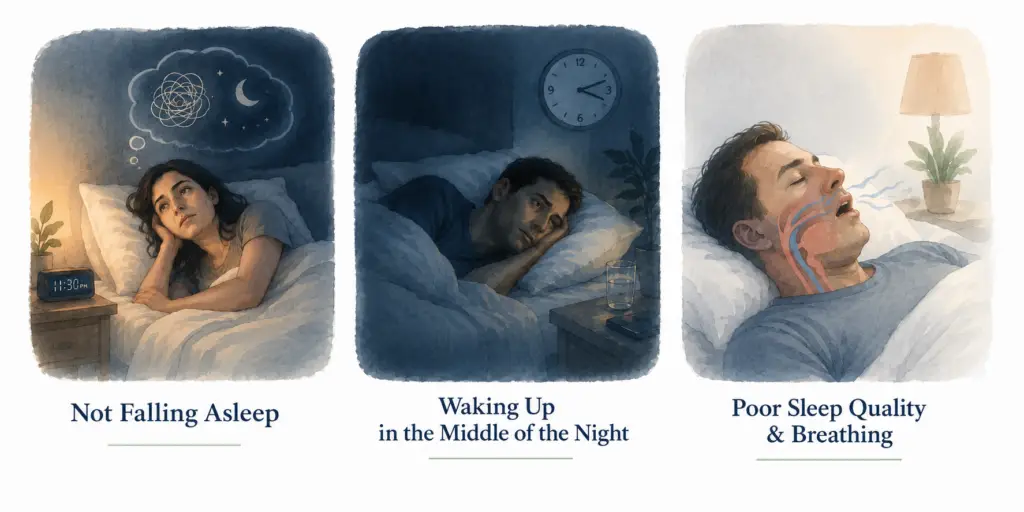
Most chronic sleep issues fall into three broad patterns.
1. Can Not Fall Asleep
This can be a circadian rhythm imbalance where the body’s internal clock is not aligned with the actual day/night cycle or when someone wants to sleep.
Another cause of this pattern is stress. At night people feel tired, but their mind can not settle.
2. Waking Up Early
These are people who wake up after a few hours of sleep. Then lay in bed for some time before falling back to sleep (if that even happens at all). Some other people are able to sleep for 5 – 6 hours, but never are able to get a full nights sleep.
This often is related to sleep apnea or other issues with breathing. But it can also include frequent waking, light sleep, vivid dreams or just discomfort during sleep.
These three broad patters of sleep issues can be further divided into even more nuanced categories. The point is to move away from treating sleep, and instead examining the individuals specific sleep issue and creating a plan specific for them.
Sleep Support Pitfalls
The problem is not bad advice per se. Rather, advice which helps a subset of people is usually promoted as a universal cure.
This is commonly seen with sleep hygiene. Yes, reducing screen time at night, a consistent bed time, darkening the room and not having it too hot can help. However, there are people who do all of that. They create long, complex end of day sleep routines and have very limited results.
Then we have sleep supplements.
GABA, theanine, ashwagandha, magnesium, melatonin, 5-htp and other sleep supplements can work through very different physiological pathways. They all help some people. None of them help everyone.
Herbal medicine can help sleep, when matched to each person’s constitution. Just taking a random herbal mix because it’s “for sleep” often gives disappointing results. Most herbs traditionally used for sleep are gentle nervines that do help people manage extra stress. They are not potent sedatives that will simply knock someone out. At times, giving the wrong herb will make sleep worse. Valerian is one of the most popular sleep herbs, but for some people makes them sleep less.
Melatonin is a perfect example of why common sleep supplements often fail. For some it helps a lot. But it’s not going to help every type of sleep issue. Also, the dose and timing are very important. Most melatonin products give a much higher dose than needed, and then people try taking it right before bed hoping it’ll work like a pharmaceutical sleeping pill.
Page on melatonin physiology and why taking it as a supplement often does not work
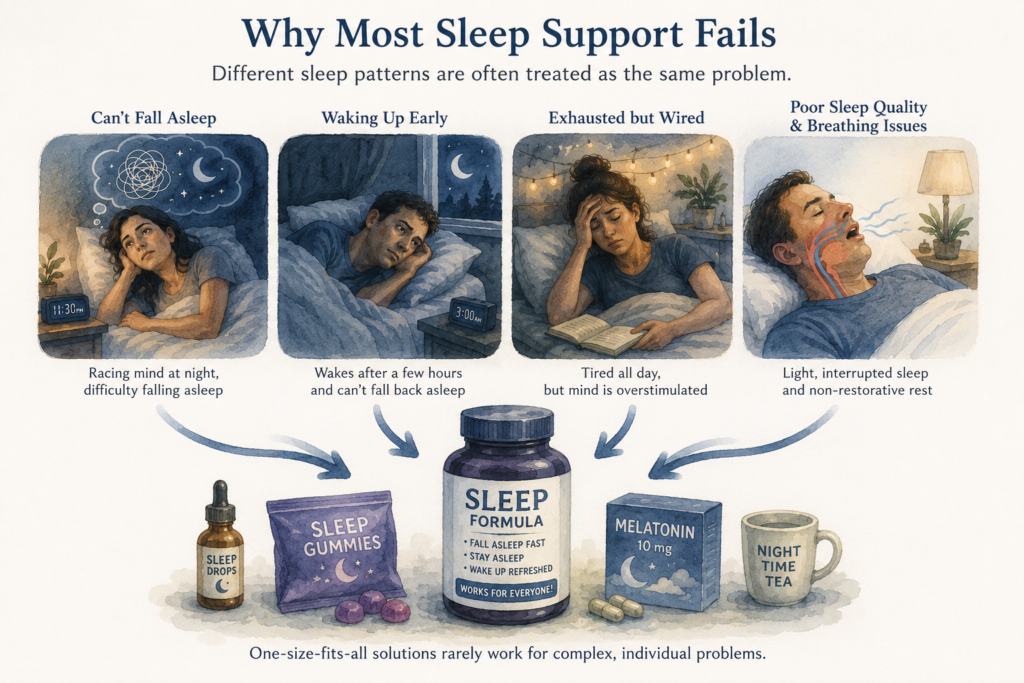
Many people with chronic sleep problems eventually accumulate:
Large supplement stacks
Constantly changing protocols
Highly restrictive routines
Sleep tracking and biofeedback devices
Often these are things people try out of frustration without understanding the underlying sleep pattern.
Putting Together a Naturopathic Plan For Sleep
A holistic plan for insomnia and sleep issues begins by understanding the timing and pattern of the sleep disturbance. Difficulty falling asleep, waking early, or non-restorative sleep can each point toward different underlying patterns.
The next step is a constitutional assessment. This includes looking at nervous system tendencies, stress reactivity, energy patterns, personality, and how someone typically responds to stress, supplements, herbs, or changes in routine.
Lifestyle and environmental factors are also important to consider, including diet, exercise, light exposure, stress levels, and sleep environment.
Finally, laboratory testing may sometimes be used when appropriate. This can include markers such as cortisol rhythm, vitamin D, or other factors that may contribute to disrupted sleep.
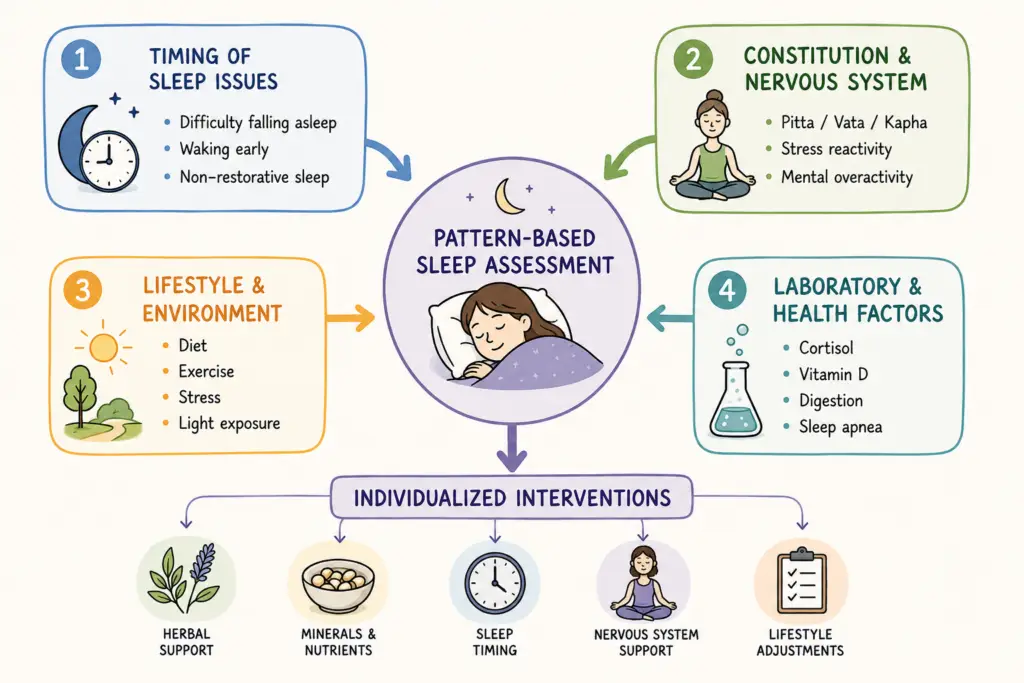
The goal is not to create an overly complicated protocol, but to identify which factors are most relevant for each individual.
Common Questions
I’ve already tried many supplements. Could this really help me.
Many people try numerous sleep supplements and online protocols without a clear understanding of the underlying sleep pattern.
Do you only use supplements for sleep?
No. Supplements may be part of a sleep plan, but treatment can also include lifestyle adjustments, circadian rhythm support, nervous system regulation, herbal medicine, and evaluating contributing health factors.
What if sleep supplements make me feel worse?
This is actually fairly common in people with chronic insomnia. Some people become very sensitive after trying many supplements or restrictive protocols. In these cases, treatment often needs to be introduced more gradually.
Do you work with people who feel “wired but tired”?
Yes. Many people with chronic sleep issues feel physically exhausted but mentally overstimulated, especially at night. This pattern is considered during the overall assessment.
Do you recommend large supplement stacks?
In general, I try to avoid unnecessarily complex protocols. Part of the goal is identifying which interventions are actually helping rather than constantly adding more supplements.
Can digestive issues or inflammation affect sleep?
Yes. Digestive symptoms, inflammation, stress physiology, blood sugar instability, and breathing issues can all contribute to poor sleep in some individuals.