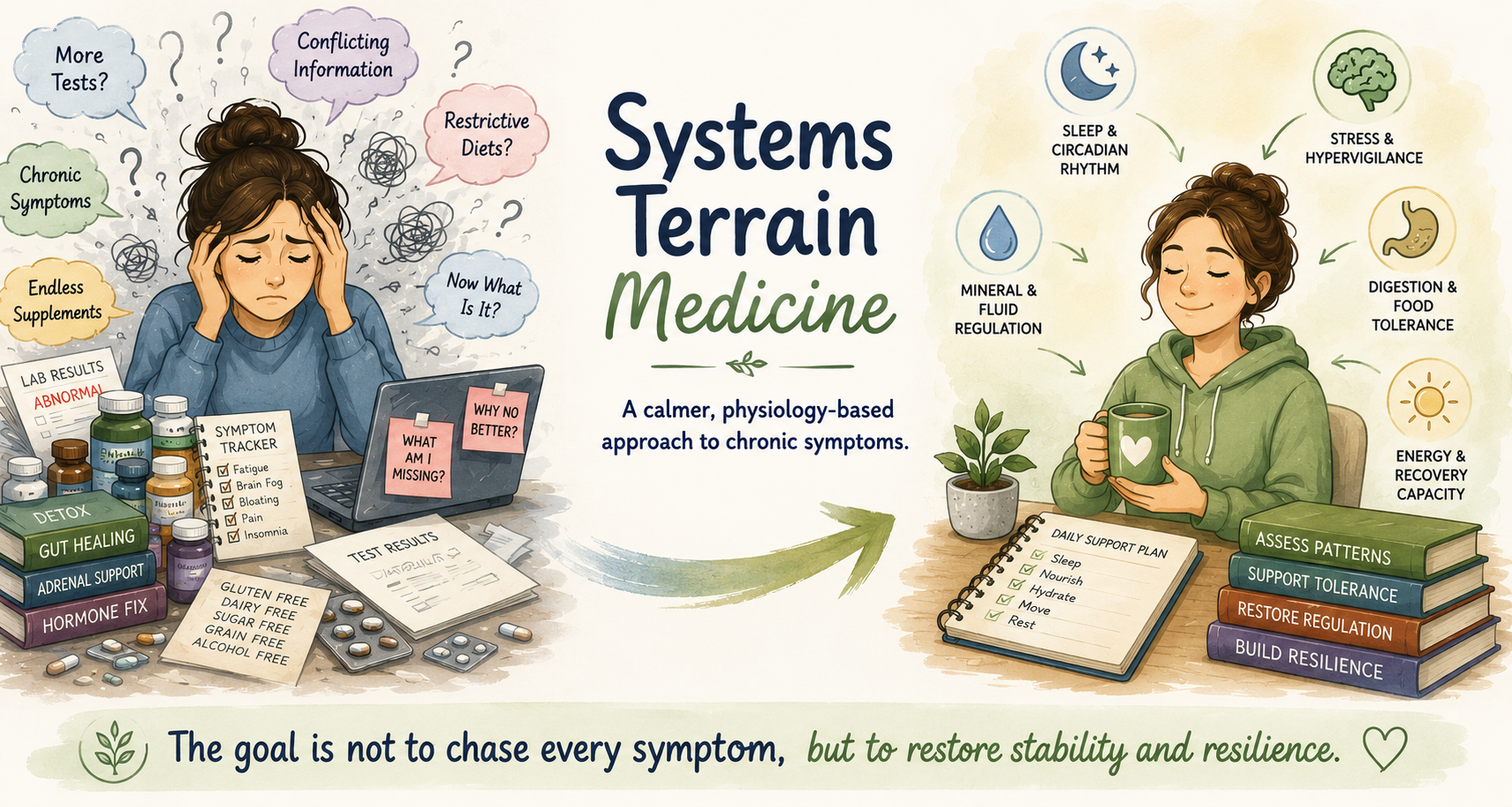
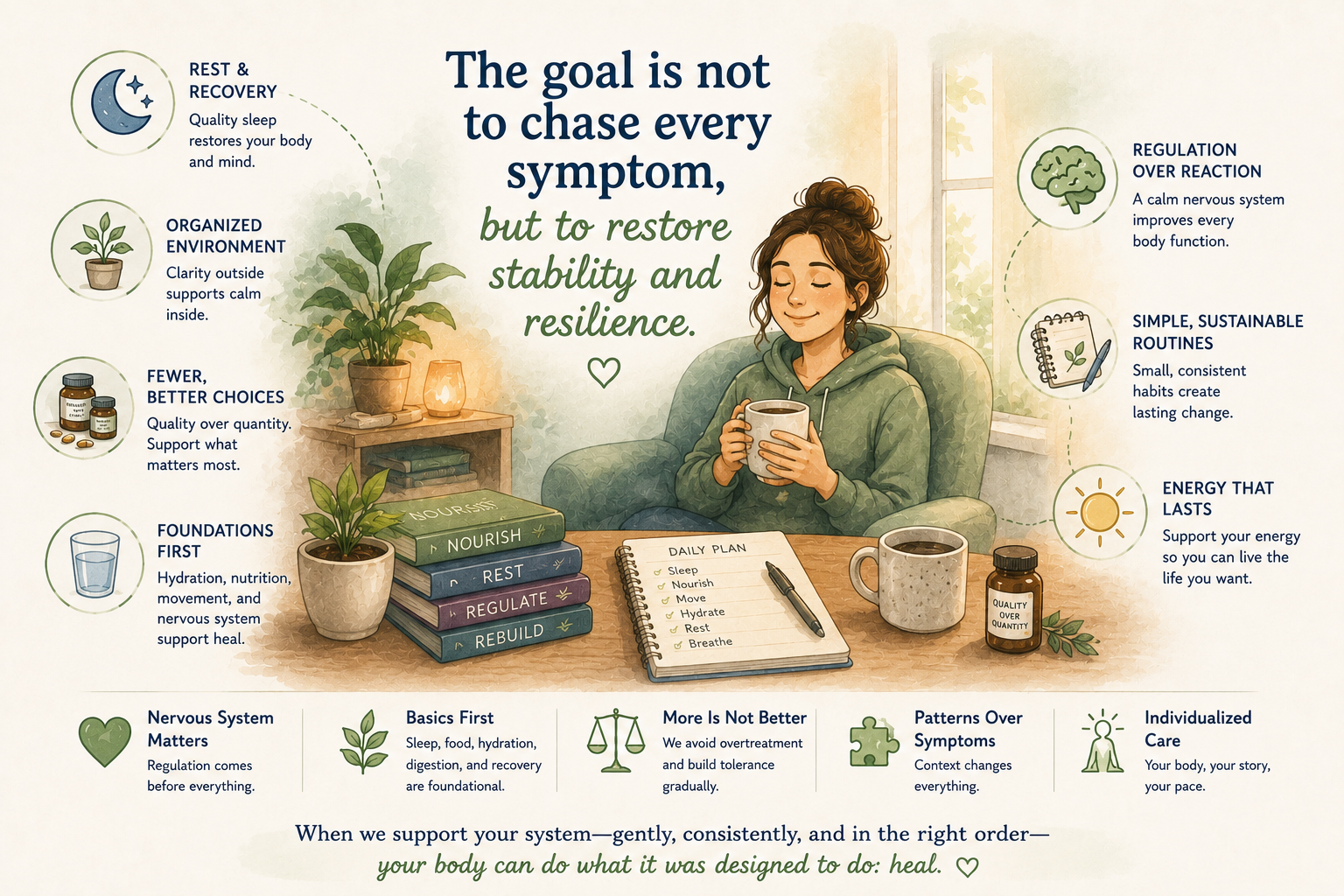
Systems Terrain Medicine is a clinical framework used to help organize chronic symptoms through physiology, nervous system regulation, constitutional patterns, and stress adaptation. It is not presented as a “new” form of medicine. Rather, it is an attempt to organize traditional natural health principles into a more practical and grounded modern framework.
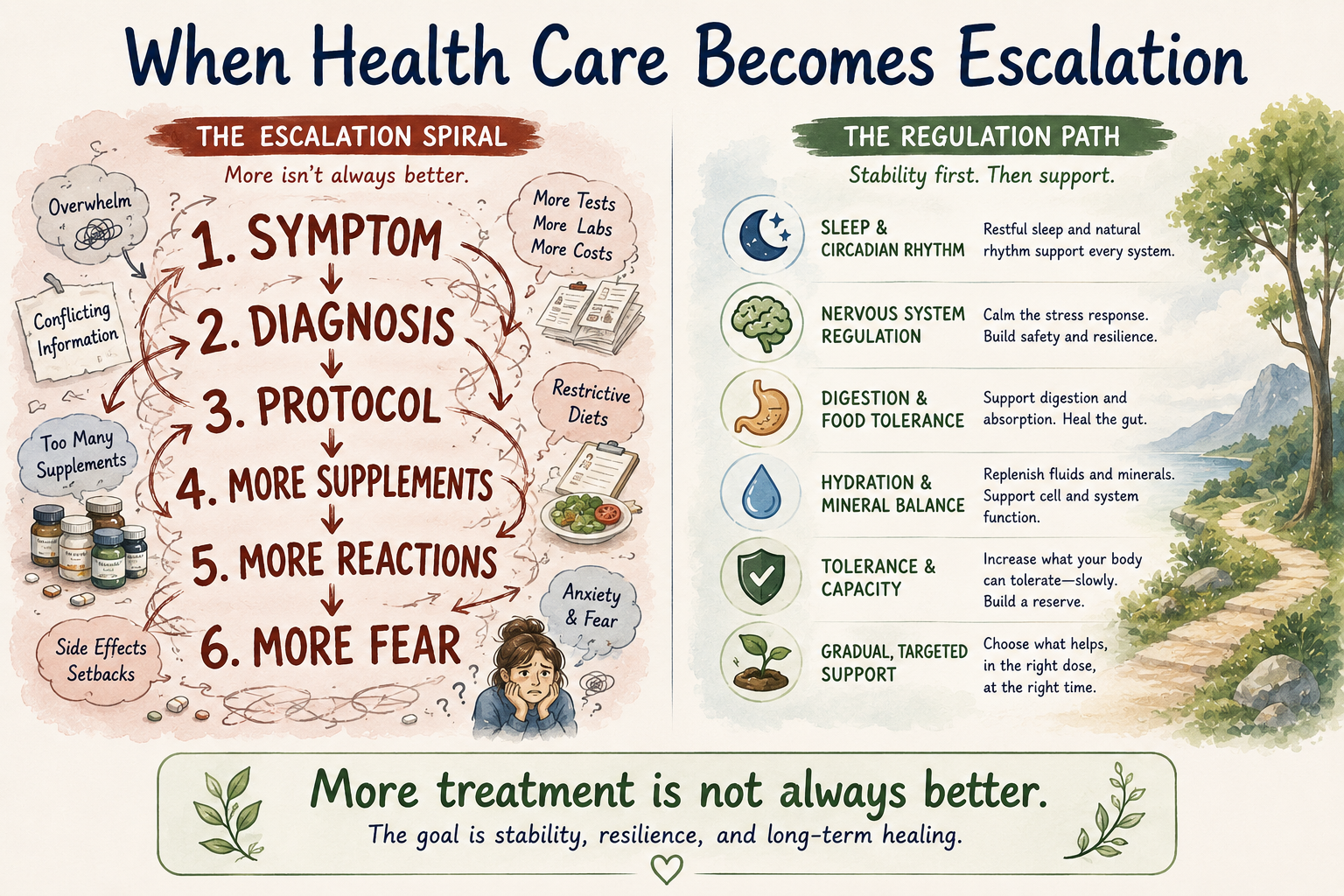
This approach developed partly in response to growing problems within modern alternative and functional health culture. Too often, cases rapidly escalate toward increasingly complicated explanations and interventions, each requiring complex testing and large supplement protocols.
Why Cases Become Overwhelming
Meanwhile, foundational principles can be overlooked: sleep, digestion, hydration, meal timing, stress regulation, and nervous system stability.
Systems Terrain Medicine places strong emphasis on supporting the nervous system and improving tolerance before escalating care. The focus is first placed on understanding how the body is functioning as a whole. Not every symptom represents a hidden infection, toxin, deficiency, or complex diagnosis.
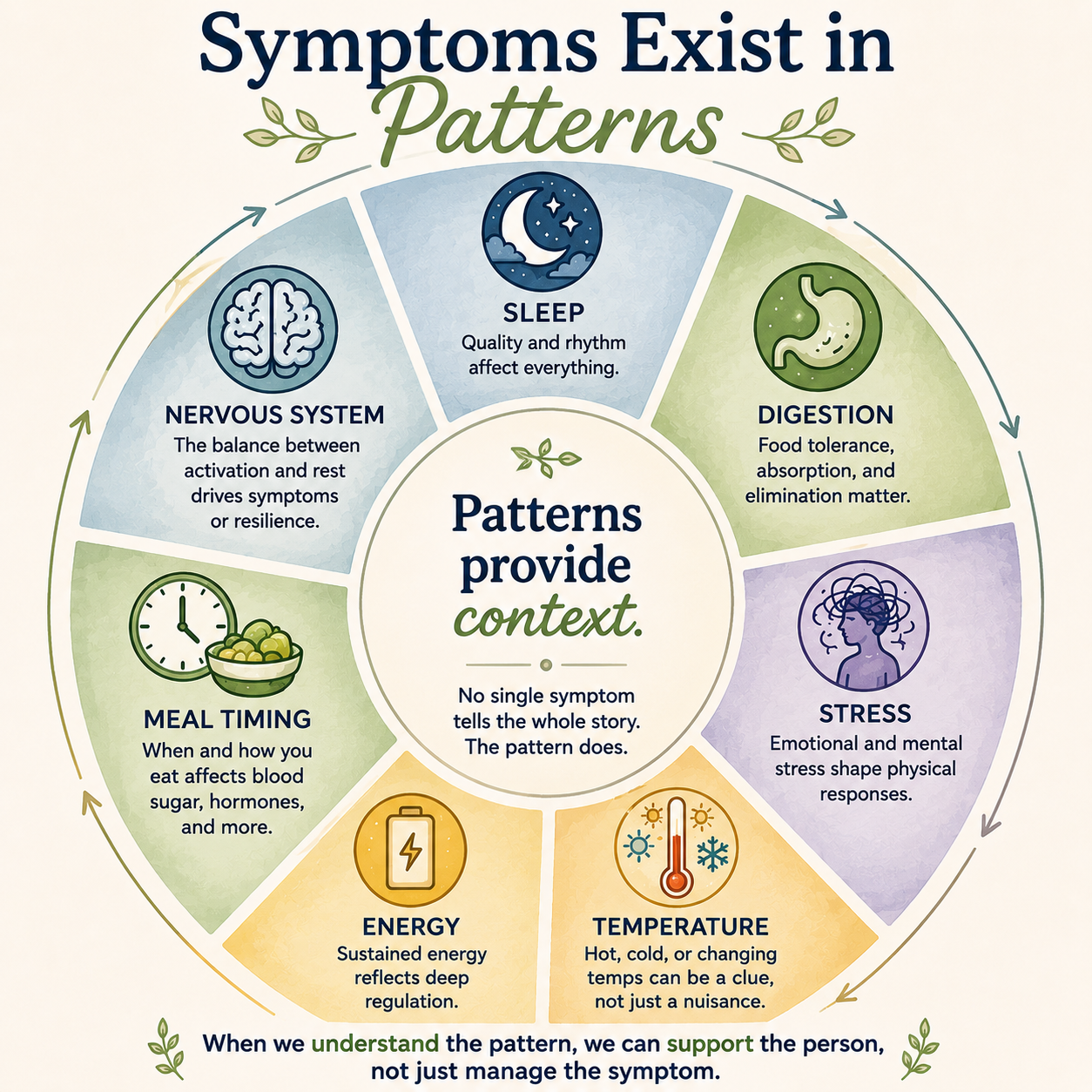
The framework draws heavily from traditional naturopathic and constitutional approaches to health. Symptoms are interpreted in context rather than isolation. Similar symptoms may emerge from very different underlying patterns depending on the individual.
Supporting the Nervous System First
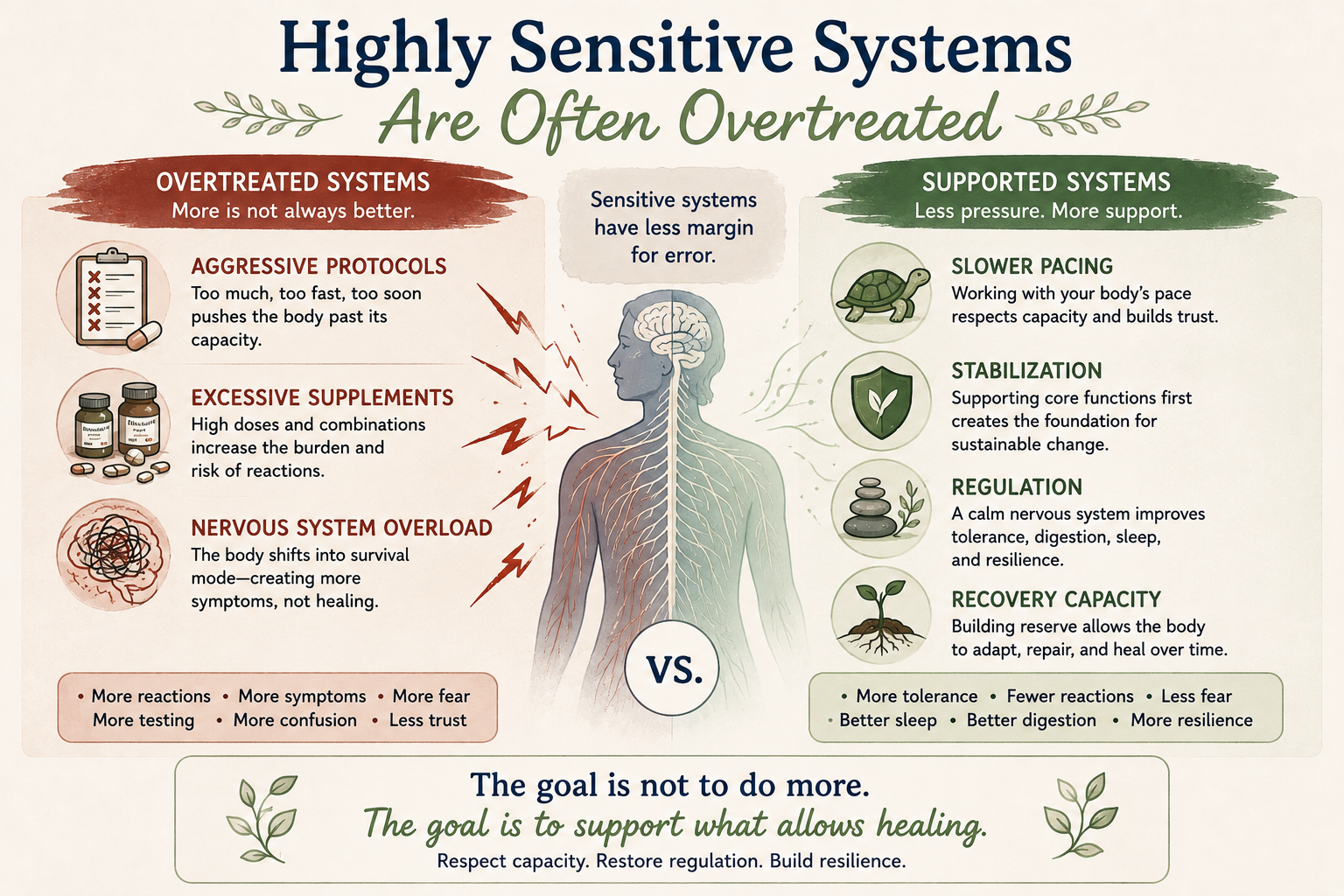
A core principle of this approach is that more treatment is not always better. Very sensitive or chronically stressed individuals are often overtreated. In some cases, aggressive protocols can worsen symptoms. For this reason, Systems Terrain Medicine emphasizes gradual, individualized interventions that match the person’s current capacity and tolerance.
Looking for Patterns Instead of Isolated Symptoms
Factors such as temperature preference, sleep quality, digestive tendencies, stress reactivity, constitution, energy patterns, and response to previous treatments may all help guide the clinical approach.
Building Stability and Resilience
The goal is to simplify complexity, reduce unnecessary escalation, and support more stable, sustainable recovery for individuals dealing with chronic stress, fatigue, sleep disruption, digestive dysfunction, hypersensitivity, and other long-standing health concerns.
Explore The Systems Terrain Medicine Approach More Deeply