Mineral Regulation, Stress, and the “Wired But Tired” Nervous System
This article is educational and not intended as individualized medical advice. Conditions involving blood pressure, kidney disease, heart disease, or severe electrolyte abnormalities require proper medical evaluation.
The Difference Between Mineral Deficiency and Poor Mineral Regulation
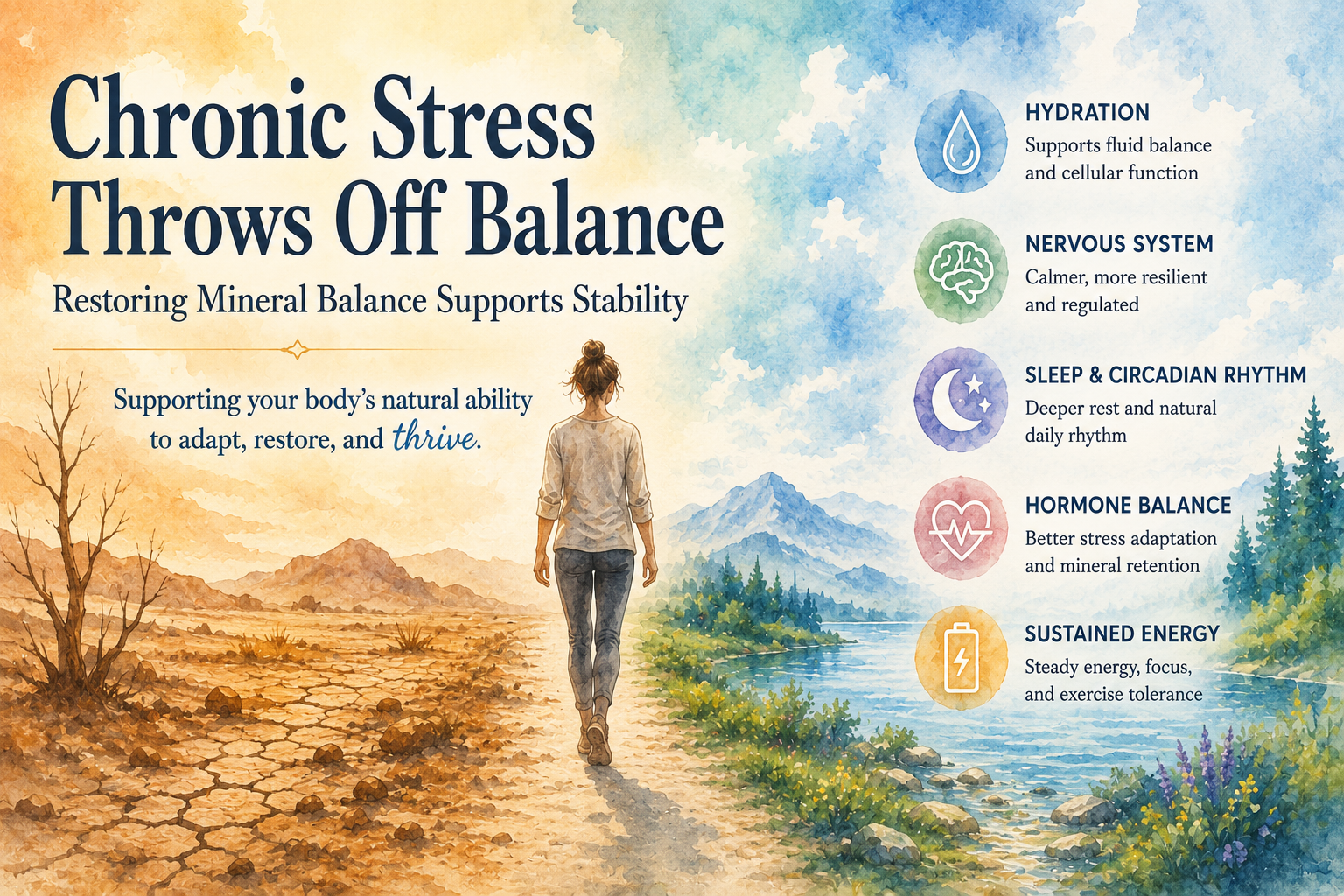
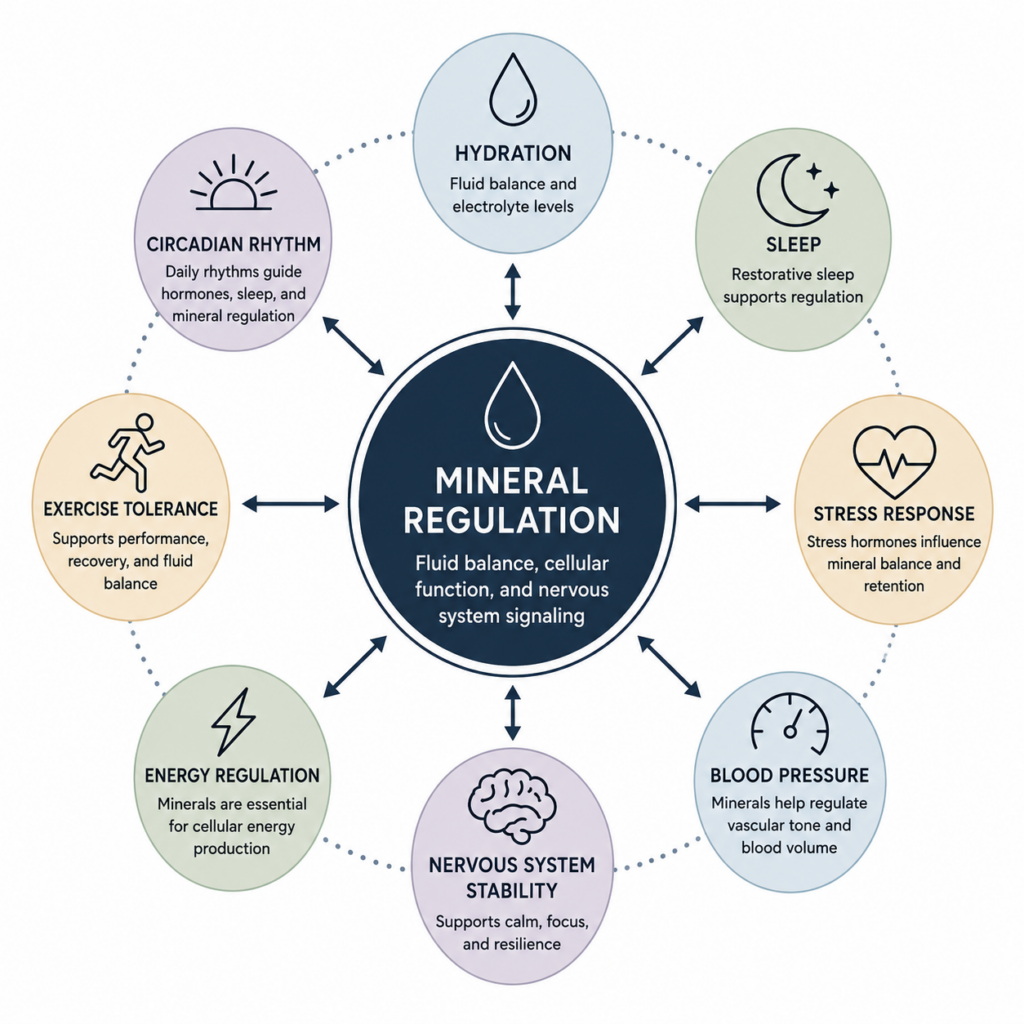
Minerals play a central role in how the body regulates energy, hydration, stress response, sleep, and much more.
Hormones, nervous system tone, water intake, medications, supplements, and even when we eat and sleep can affect which minerals we hold onto, or simply pee out in the urine.
The issue is not always a simple lack of minerals. Sometimes the problem is instability in how the body regulates and retains them.
Sodium and Salt – Good or Bad?
Depending on who you ask, salt is either good or bad for health. Many processed food are high in sodium and can raise blood pressure in those who are salt-sensitive. So sodium has long had a reputation as one of the bad things in the Standard American Diet.
In natural health many promote using more salt. Celtic sea salt and Himalayan pink salt are popular with many health-conscious people.
Both sides are partially correct. The Standard American Diet, full of processed foods is very high in sodium. For those who are sensitive this can raise blood pressure.
On the other hand, when people eliminate processed foods, sodium intake can drop substantially as well. And sodium as we’ll see is an absolutely essential nutrient..
Sodium and water regulation
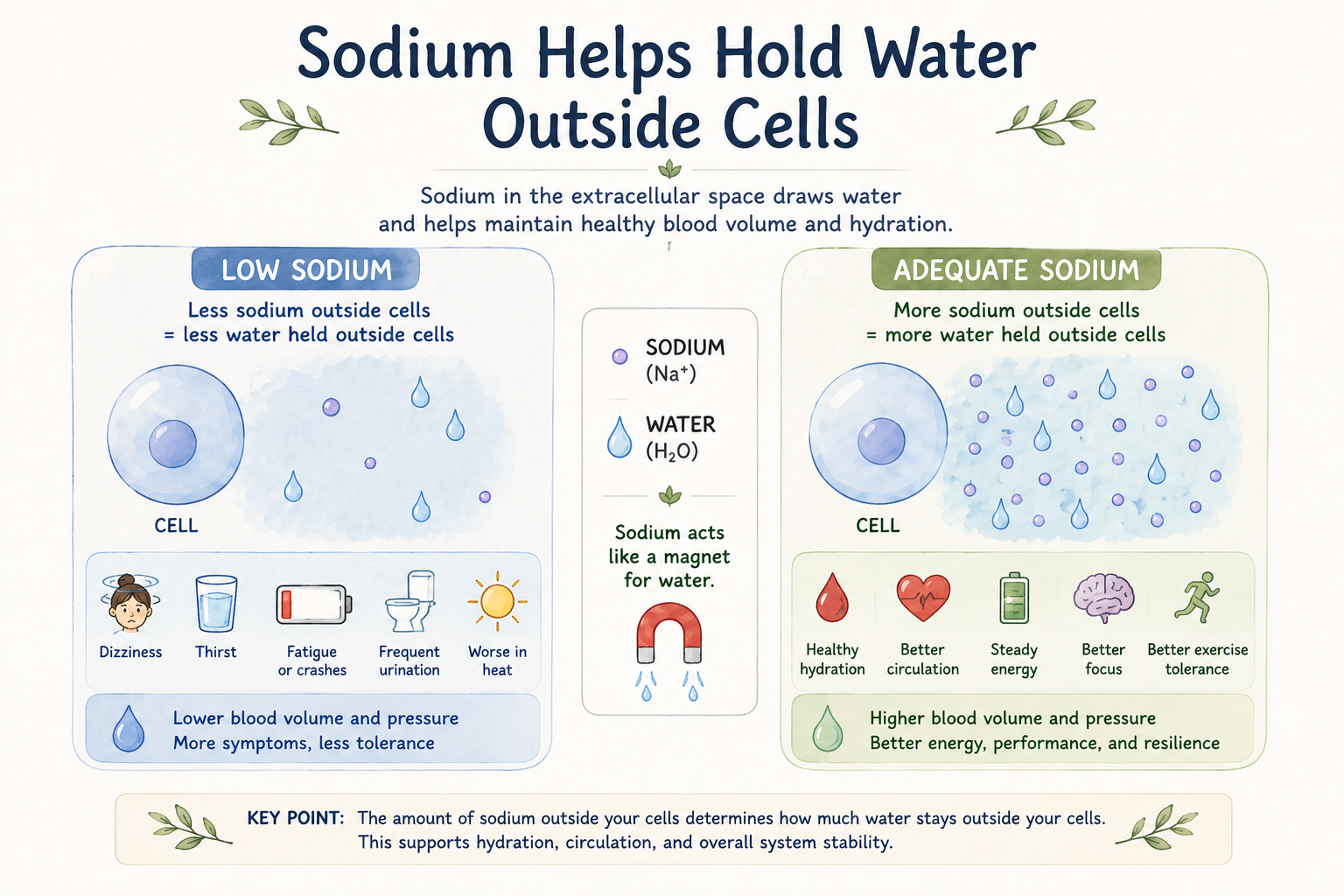
Inside the body, water needs a mineral gradient to hold it in place. Without appropriate mineral balance, cells may struggle to regulate hydration properly even when water intake is adequate. Similarly, if our blood does not have enough minerals, we lose water volume.
Sodium is the body’s primary extracellular mineral. This means it is mostly found outside of cells in the blood serum (plasma), interstitial fluid (fluid between cells) and lymph. We need sodium in these place to hold onto water.
Sodium, Hormones and Water Regulation
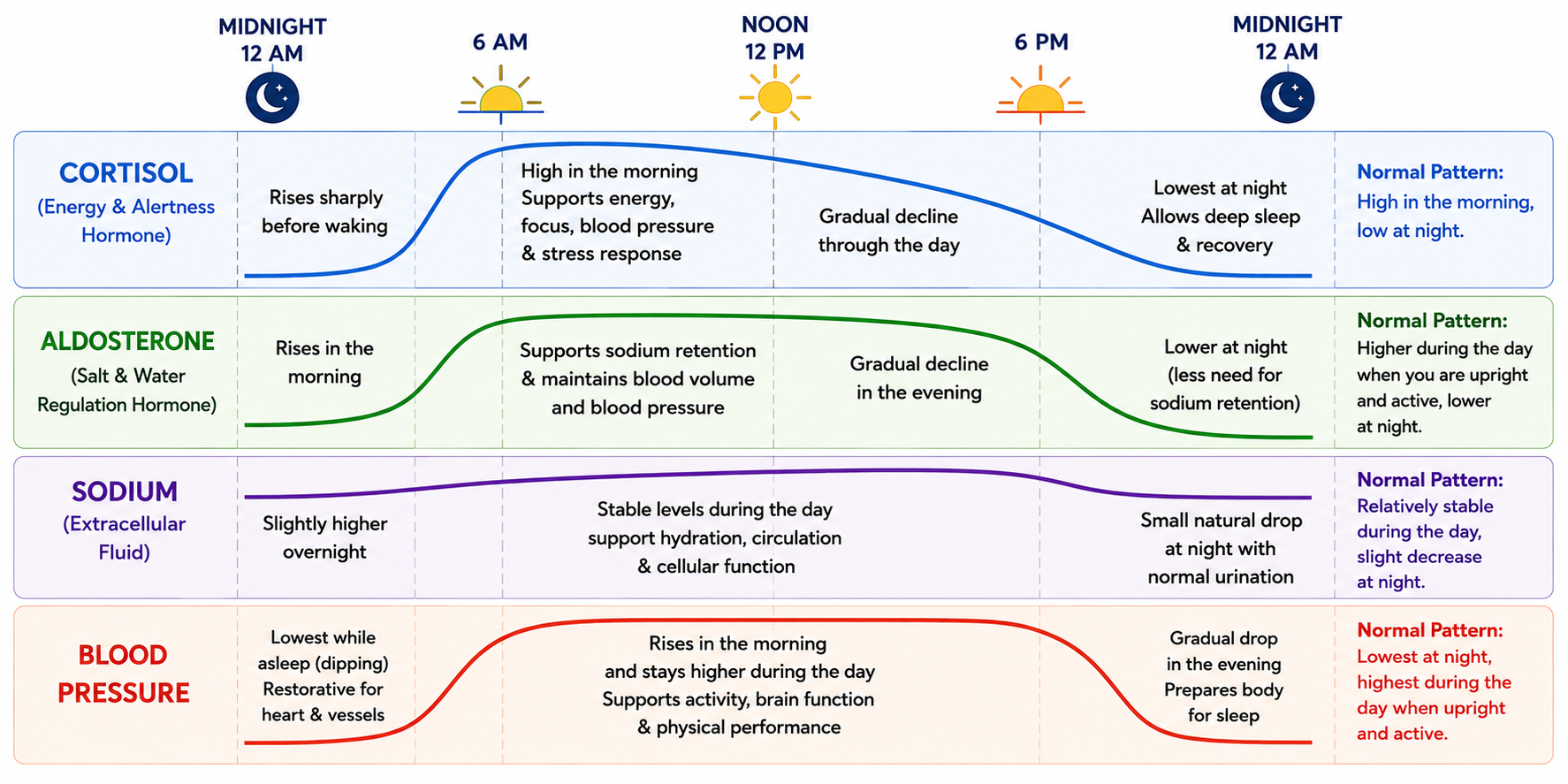
During the day we tend to retain more water. This helps maintain blood pressure, circulation, hydration, and helps during physical activity.
At night, physiology shifts. Blood pressure naturally drops during sleep, urination may increase slightly, and the body moves into a more restorative state.
Two adrenal hormones play a major role in this rhythm:
Cortisol, the body’s primary stress hormone.
Aldosterone, just like cortisol this is also made in the adrenals. It increases sodium retention in the kidneys. Through this mechanism, more aldosterone increases water retention as well.
Signs of Low Sodium and Poor Fluid Retention
This system of sodium and water regulation can be affected by factors such as chronic stress, insomnia, over-training, illness, restrictive dieting or prolonged fasting.
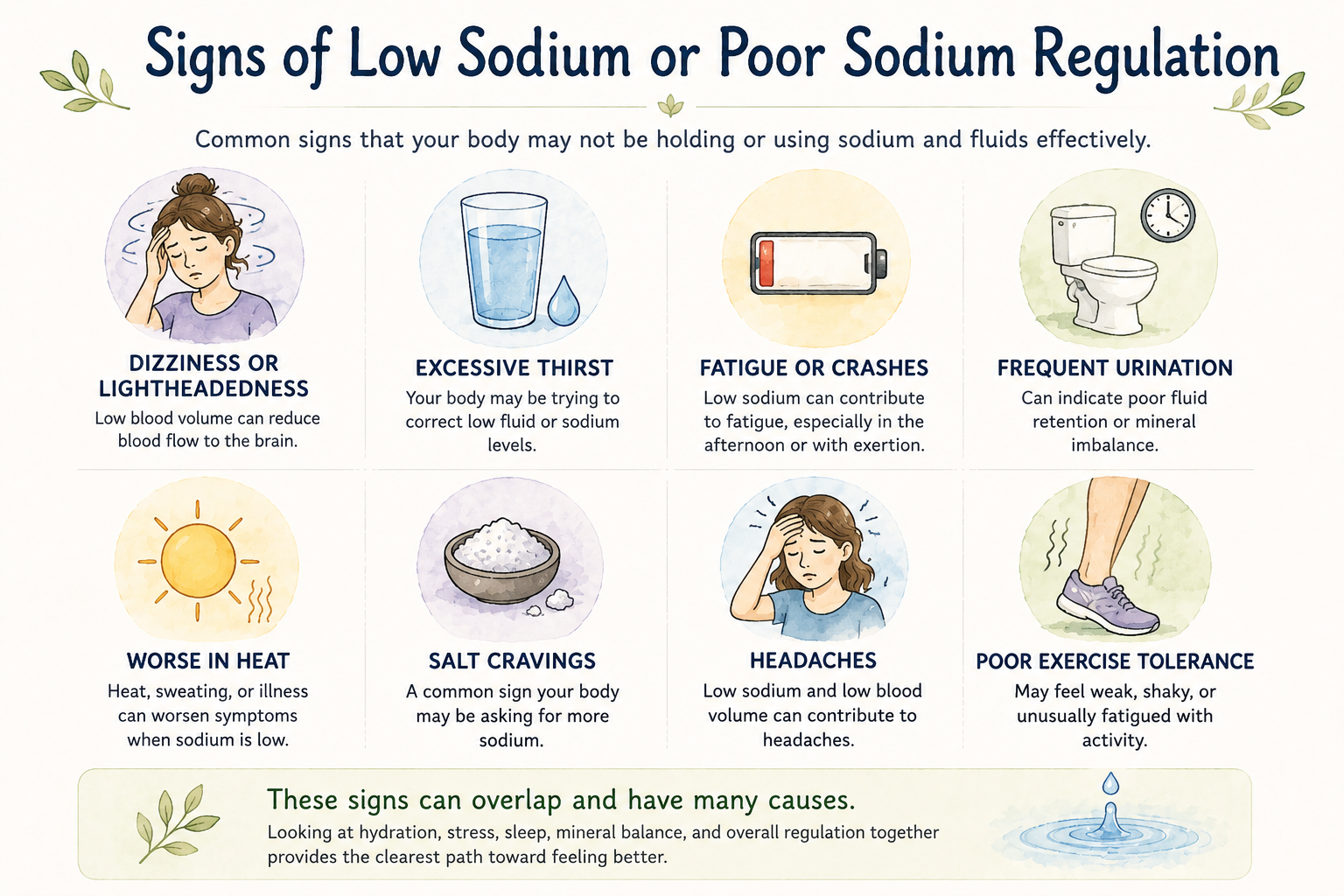
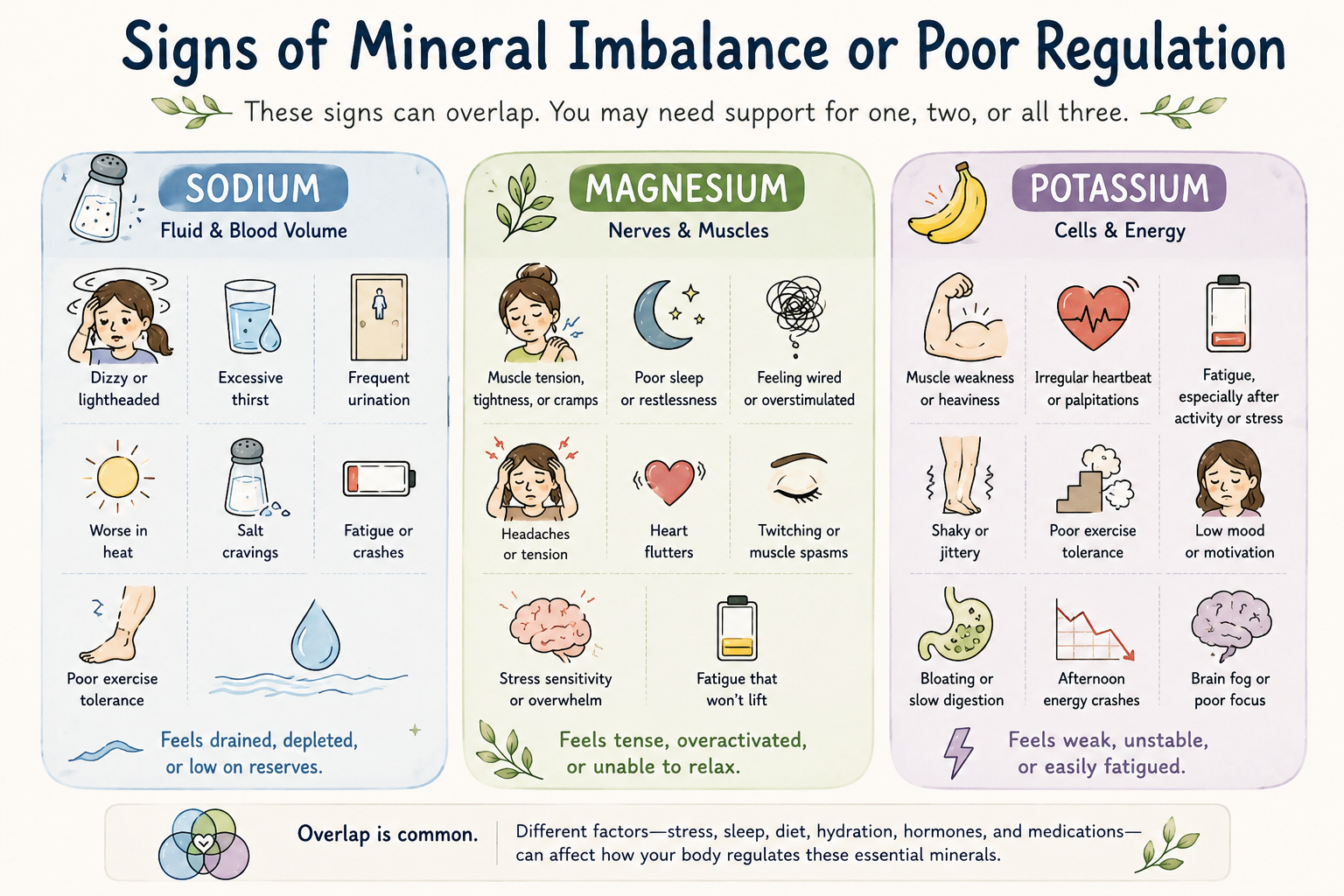
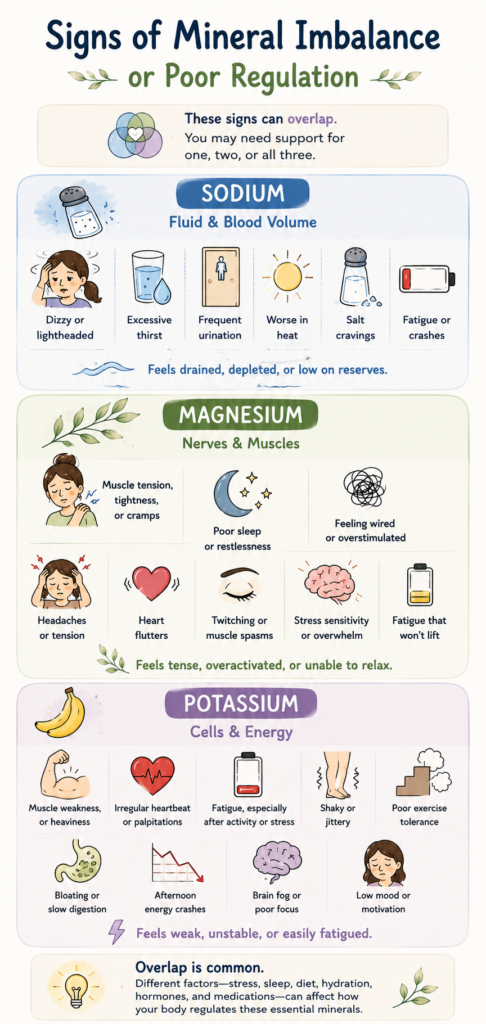
All of these can trigger the adrenals to make less aldosterone. This lowers water retention and is associated with the following symptoms:
dizziness when standing
fatigue or crashes
excessive thirst
frequent urination
poor exercise tolerance
salt cravings
feeling worse in heat
“wired but tired” states
Why “Adrenal Fatigue” Is Often More Complex Than It Sounds
You may be familiar with the concept of “Adrenal Fatigue.”
The basic ideas is that prolonged stress fatigues the adrenal glands. Eventually this causes production of the hormone cortisol to drop. Which causes fatigue, poor sleep and the other symptoms listed above.
Aldosterone is rarely mentioned as a factor in “adrenal fatigue.” It is another steroid hormone, made by the adrenals, and many of the classic adrenal fatigue symptoms can be understood in part as a results of poor aldoosterone and salt regulation.
There is some disagreement among those in holistic health over how accurate the Adrenal Fatigue model ever was. Regardless, for simple cases it was useful.
A relatively health person goes through a period of extra stress. They take their adrenal supplements for support, and it helps them get through it.
The problem came when this model was used to sell supplements to many people with long term chronic stress, insomnia, highly sensitive nervous systems or other issues causing fatigue.
Part of the original Adrenal Fatigue model also included lifestyle and dietary changes to manage stress. Something which became somewhat forgotten as supplement companies brought out various adrenal boosting supplements as the concept became more popular.
For people reading this article who had tried adrenal supplement and seen no effect, I want to point out two things:
- As the concept became more popular, adrenal supplements became heavily promoted by supplement companies as an energy aid for conditions beyond the scope of the original Adrenal Fatigue model.
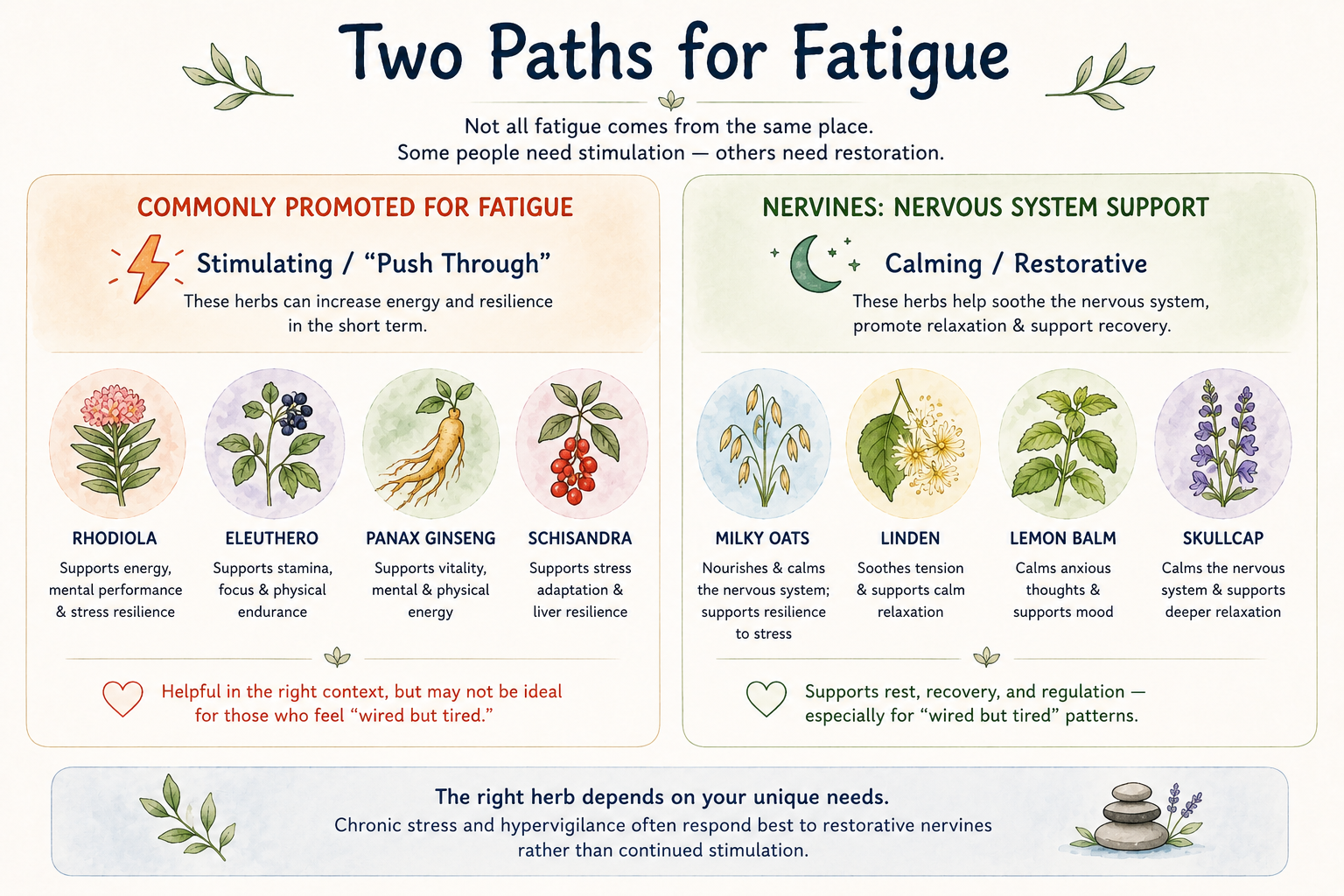
- The Adrenal Fatigue model always promoted the use of energy stimulating supplements. However, from a traditional herbal perspective, stimulating herbs are often wrong for some people who are experiencing the worst fatigue.
For many, the most ideal herbs would nerviness such as linen, milky oats, American skullcap.
Supplementing With Salt
If the problem goes back to aldosterone and lows salt retention, then what about simply supplements with salt?
This does help some people, if done correctly. A small amount of salt in the morning may help support blood volume and hydration in some individuals.. Online this has been popularized as salt and lemon juice in morning. When I recommend this to clients, I leave out the lemon juice. It’s the salt itself that matters physiologically, helping support sodium balance and blood volume. Someone can use lemon juice if they want, but it’s not important.
This does not work for everyone. There are some people who are genuinely salt sensitive, and can see blood pressure fluctuations. There are also other people who have sensitive nervous systems and will not react in expected ways to most supplements. Even some salt in the morning can make them feel off. For supplement sensitive people I always suggest to start very slow. If it does not work, then stop doing it. I have had people who needed to start mineral plans with other strategies because they couldn’t tolerate salt.
Why Stress Causes Frequent Urination and Fluid Loss
This involves activation of the autonomic nervous system. The body prioritizes immediate stress adaptation over long-term restoration, hydration stability, and recovery. Blood pressure regulation, mineral balance, thirst, bladder sensitivity, stress hormones, and fluid balance can all become less stable. The body is basically shifting minerals to prepare for a fight.
This is meant to be a temporary survival mechanism. If the stress does not go away we can get long term symptoms such as:
thirst
frequent urination
fatigue
dizziness
nighttime waking
salt cravings
feeling anxious
Low-Carb Diets, Fasting, and Electrolyte Imbalance
When carbohydrate intake drops, insulin levels often decrease as well. One effect of this is that the kidneys may retain less sodium, particularly during the early phases of fasting or carbohydrate restriction. Glycogen depletion also leads to loss of stored water.
Some individuals adapt to this well and feel more stable. Others may develop symptoms from low sodium and less water retention.
This does not necessarily mean low-carbohydrate diets or fasting are inherently harmful. But in susceptible individuals — particularly those already dealing with chronic stress, sleep disruption, nervous system hyper-vigilance, illness, or over training — aggressive fasting or carbohydrate restriction may further destabilize fluid and mineral regulation.
Afternoon Fatigue and Nighttime Alertness
In some cases, the body appears able to temporarily compensate earlier in the day through stress hormones, stimulation, momentum, or frequent eating. Later in afternoon those compensations begin to drop away. People experience predictable energy crashes between late morning and early evening. They may suddenly feel exhausted, mentally foggy, or unable to continue functioning normally.
Finally the “second wind” comes later at night. This can be the time to finally get things done. Although for others, the “second wind” interferes with sleep.
This pattern may involve unstable blood sugar regulation, stress hormones, mineral balance, fluid shifts, circadian rhythm disruption, and nervous system hyperarousal.
Magnesium and Nervous System Regulation
Sodium and magnesium regulate different but closely connected parts of physiology. Sodium is held in the extracellular space and magnesium is primarily held intracellular. It is involved in muscle relaxation, nerve signaling, stress response and energy regulation. Under stress, along with sodium and water, the body will also tend to lose magnesium as well.
Magnesium: Day vs Night
Magnesium is often viewed as a simple “relaxation mineral,” but responses to magnesium vary significantly between individuals.
Timing also matters.
Many people tolerate magnesium best later in the day or in the evening, when the nervous system is naturally supposed to shift toward a more restorative state. However, I have seen individual response vary a lot. Some people feel excessively sedated with higher doses. Others paradoxically feel more alert or stimulated. Different forms and timing strategies may be appropriate depending on the individual and their symptom pattern.
Potassium
Potassium is primarily an intracellular mineral and works closely with sodium in fluid balance, nerve signaling, muscle contraction, cardiovascular regulation, and cellular energy production.
While sodium helps regulate the extracellular fluid surrounding cells, potassium plays a major role inside the cell itself.
Under stress, especially when combined with excessive urination, sweating, restrictive dieting, fasting, stimulant use, over training, or poor sleep, potassium balance may become disrupted along with sodium and magnesium regulation.
Some individuals appear to benefit from potassium-rich foods or modest supplementation, particularly when dealing with chronic stress patterns, excessive sweating, low blood pressure, or low-carbohydrate dieting. However, potassium supplementation is not appropriate for everyone and excessive intake may worsen fatigue, weakness, lightheadedness, or cardiovascular symptoms in susceptible individuals.
As with other minerals, balance and regulation matter more than aggressively pushing high doses. It some cases of high stress or a very reactive nervous system, potassium helps before using other minerals.
Calcium
Calcium plays important roles in bone structure, nerve signaling, muscle contraction, and cardiovascular function.
In the past, calcium supplementation was extremely common.
Today, many practitioners place greater emphasis on overall mineral balance, vitamin D, magnesium, vitamin K2, exercise, digestion, and hormonal health rather than simply pushing high-dose calcium supplementation alone.
Some individuals may benefit from additional calcium intake, particularly when dietary intake is poor. However, excessive calcium supplementation is not always appropriate and may worsen constipation or contribute to feelings of tension or overstimulation in susceptible individuals.
Why Some People Feel Worse With Minerals
Minerals influence fluid balance, blood pressure regulation, nerve signaling, muscle function, stress hormones, and hydration throughout the body. Because of this, responses to mineral supplements can vary significantly between individuals.
Some people feel calmer, more stable, and better hydrated with the right mineral support. Others may temporarily feel worse — experiencing fatigue, thirst, increased urination, lightheadedness, headaches, palpitations, digestive upset, emotional flattening, or a sense of overstimulation.
This does not always mean the mineral itself is “bad.” In many cases, it reflects an underlying instability in how the body is regulating fluids, stress, and the autonomic nervous system.
For example, sodium, potassium, and magnesium all influence fluid distribution, adrenal signaling, vascular tone, and nerve excitability. In individuals living in a prolonged stress state — including chronic hypervigilance, poor sleep, overtraining, restrictive dieting, excessive fasting, or chronic illness — the body may adapt to functioning in a dysregulated state. Rapidly increasing minerals can sometimes shift these compensations too quickly.
Some individuals may retain fluids poorly. Others may increase urination excessively. Some may experience temporary drops in blood pressure or changes in nervous system activation. In other cases, digestive irritation, poor absorption, or imbalances between minerals may contribute to symptoms.
This is one reason why aggressively increasing supplements does not always improve symptoms. Timing, dosage, hydration status, sleep, meal patterns, and overall nervous system stability often matter as much as the supplement itself.
In Systems Terrain Medicine, the goal is not to force the body with excessive supplementation, but to gradually improve regulation, resilience, hydration, sleep quality, and autonomic stability over time.
Supporting Regulation Instead of Stimulation
There is no single mineral protocol that works for everyone. Some people benefit from modest increases in sodium intake, particularly earlier in the day or during periods of stress. Others may feel worse with excessive sodium, fluid intake, or overly aggressive supplementation.
The general tendency is to self-treat these symptoms with caffeine, energy supplements, or stimulating “adrenal support” formulas. While these approaches may temporarily increase alertness, long-term improvement usually comes more from restoring sleep, hydration, stress recovery, circadian rhythm, mineral balance, and nervous system stability.
Symptoms such as fatigue, dizziness, nighttime waking, frequent urination, exercise intolerance, hypervigilance, and “wired but tired” states are often connected patterns rather than isolated problems. Understanding these patterns may require looking at sleep, stress physiology, hydration, diet, nervous system function, and mineral regulation together rather than as separate symptoms.
For some individuals, relatively simple changes involving hydration, meal timing, sleep, stress reduction, or mineral support may improve stability significantly. Others may require a slower and more individualized approach over time.